Why Radioactive Materials End Up in Conventional Hospital Waste
Even with strict nuclear medicine procedures, radioactive materials can occasionally enter conventional hospital waste.
Posted the 06/08/2026
Radioactivity in Hospital Waste
The handling of radioactive substances in hospitals is subject to strict regulatory requirements. Modern nuclear medicine departments therefore operate established procedures for the collection, storage, and release of radioactive waste.
Nevertheless, radioactive materials occasionally enter the conventional waste stream. In many cases, this is not due to errors within the nuclear medicine department itself, but rather to materials being disposed of outside controlled areas after patient transfers or through incontinence products. As a result, radiation alarms may be triggered at waste incineration facilities.
Established Procedures in Nuclear Medicine
Radioactive waste generated in nuclear medicine is collected, documented, and temporarily stored until it can be cleared for disposal.
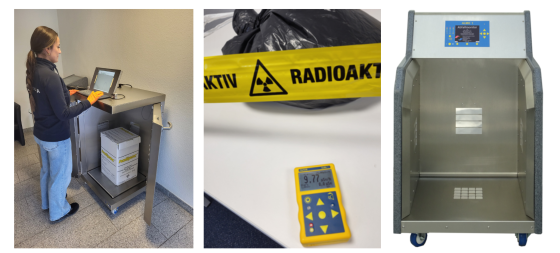
For clearance measurements, systems such as the FR-6 and FR-10 from NUVIATech Instruments are used. Waste packages are registered, identified via barcode, and managed within the systems’ integrated waste management software. Storage times, radionuclides, activity levels, and automatic reminders can all be documented and tracked.
After the required decay period, the waste is measured again. If the residual activity is below the applicable clearance limits, the material can be released for conventional disposal or recycling.
A similar approach is applied to radioactive wastewater generated in nuclear medicine departments. Wastewater from patient toilets, showers, and other designated areas is collected in dedicated storage and decay tanks. Depending on the radionuclides involved, the wastewater is retained for a specified period to allow its activity to decrease through radioactive decay. Following verification measurements and confirmation that regulatory clearance criteria have been met, the wastewater may be discharged into the conventional sewer system in accordance with national regulatory requirements.
How Radioactive Materials Enter General Waste
One of the main causes arises at the interfaces between nuclear medicine and other hospital departments.
For example, a patient may be transferred to another ward following a nuclear medicine examination or therapy due to a medical emergency. In such cases, potentially contaminated materials may be disposed of through the regular ward waste stream.
Items most commonly affected include diapers, incontinence products, dressings, and other disposable materials.
Diapers as a Typical Source of Radiation Alarms
Many radiopharmaceuticals are excreted primarily through the kidneys. As a result, a significant portion of the remaining activity may be present in the patient’s urine. Diapers and incontinence products can therefore contain measurable levels of radioactivity. If these items enter the regular hospital waste stream, they may later be detected at waste incineration plants.
Although the measured activity levels generally do not pose a health risk, every radiation alarm should be investigated and documented.
Additional Safety Measures in Hospitals
To address this issue, additional radiation monitoring systems can be installed at central waste collection points, waste storage rooms, or waste compaction facilities. Examples include:
- ALMO systems equipped with highly sensitive NaI detectors
- NuClearance systems featuring large-volume plastic scintillation detectors
- Mobile monitoring units for individual disposal points, such as DolMo, SCINTO or the simple waste control monitor WCM
These systems make it possible to identify radioactive materials before they leave the facility. Hospitals operating nuclear medicine departments can particularly benefit from this additional layer of safety.
Conclusion
The disposal of radioactive waste in nuclear medicine is based on clearly defined and well-established procedures. Systems such as the FR-6 and FR-10 support the documentation, storage, clearance measurements, and regulatory release of radioactive waste after an appropriate decay period.
At the same time, radioactive materials can enter the general hospital waste through contaminated diapers or during unplanned patient transfers. Additional monitoring systems at waste collection points or compaction facilities help detect such cases at an early stage and prevent radiation alarms at waste incineration plants.
This further enhances safety for hospitals, waste management operators, and regulatory authorities.